
Revenue becomes predictable
Clear pipelines, conversion rates and forecasting history turn assumptions into evidence.
Most businesses are undervalued, not because they lack revenue, but because they lack visibility into how that revenue actually works.
A CRM does not increase value on its own. What increases value is structured data, predictable revenue, and a system a buyer can trust.
A well-implemented CRM can increase business value by 10% to 40% or more.
The difference is not the tool itself. It is whether your revenue is visible, predictable and transferable.
Buyers do not pay more for software. They pay more for certainty.
Most businesses get this wrong by assuming a CRM increases value by default. It does not.
A CRM only adds value when it reflects how revenue is actually generated, tracked and grown. Without structure, it becomes another system that creates confusion rather than clarity.
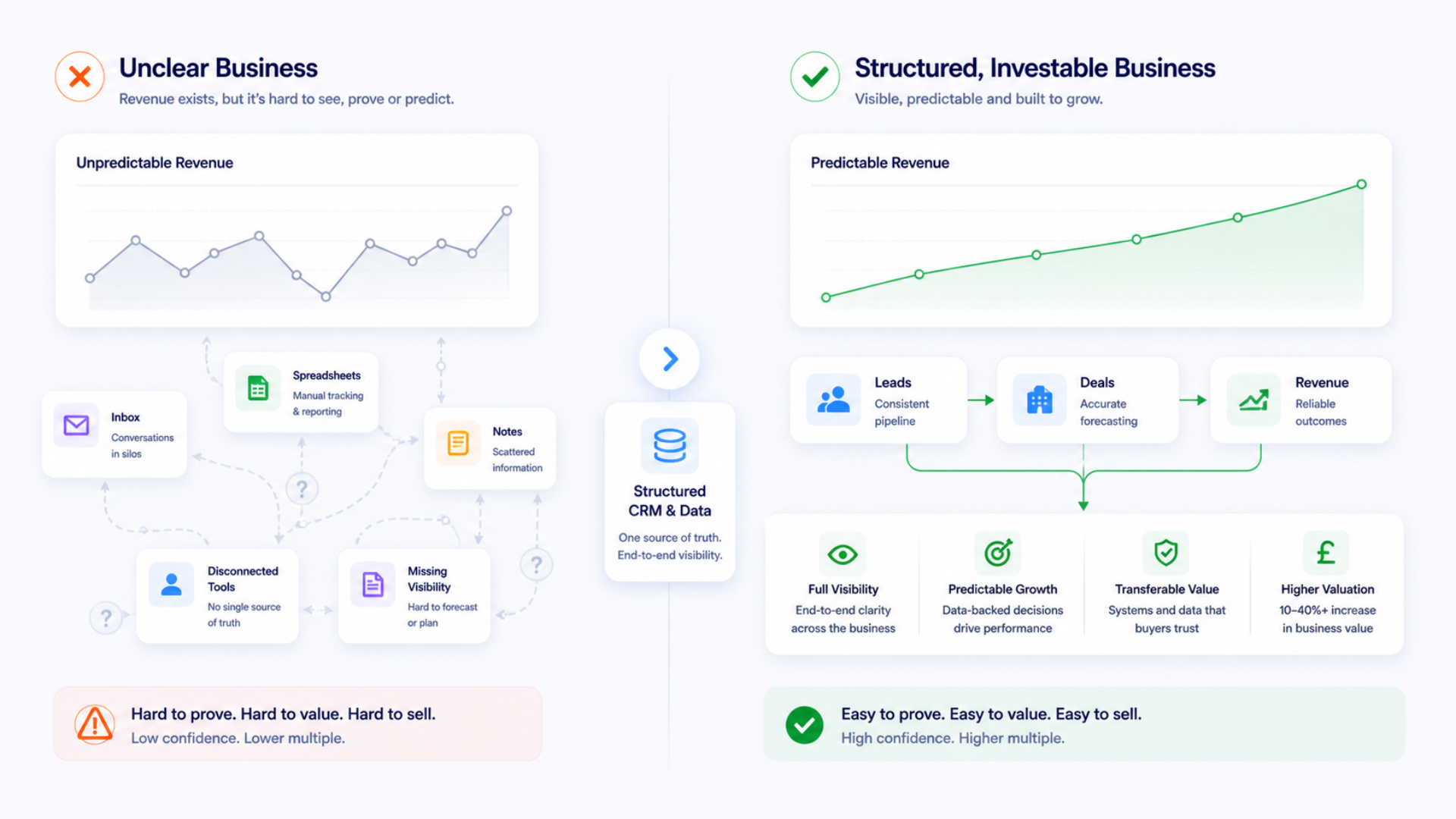
The impact of a CRM on valuation comes from what it allows a buyer to see, understand and trust.
Clear pipelines, conversion rates and forecasting history turn assumptions into evidence.
Buyers can see how deals move, where revenue comes from and how consistent performance is over time.
Customer relationships, deal history and processes are documented rather than held in the owner’s head.
Opportunities, bottlenecks and expansion paths are visible, making future revenue easier to justify.
Most businesses are not undervalued because they lack revenue. They are undervalued because they cannot clearly explain it.
Revenue exists, but it is fragmented across inboxes, spreadsheets and individual knowledge.
From a buyer’s perspective, that creates uncertainty.
And uncertainty reduces value.
The presence of a CRM does not change valuation on its own. The structure behind it does.
The shift is not operational. It is psychological.
Buyers move from questioning the numbers to trusting them.
That is where valuation increases.
Direct answers to the questions teams ask about valuation, certainty and CRM structure.
No. A CRM increases value indirectly by improving revenue visibility, predictability and transferability.
Typically between 10% and 40% more, depending on how well the system is structured and used.
Because it reduces uncertainty. Buyers want to understand how revenue is generated and whether it can continue after the sale.
Yes. Poor data quality, low adoption or inconsistent use can reduce confidence and increase perceived risk.
No. Value comes from having a structured revenue system, not just a tool.
Valuation improves when buyers trust how revenue is generated, tracked and sustained.
Understand what your business is actually worth →No pressure. No hard sell. Just practical guidance.
If your revenue is not clearly structured, you may be leaving value on the table.
We help businesses turn CRM, data and processes into something buyers can trust.
No pressure. No hard sell. Just practical guidance.